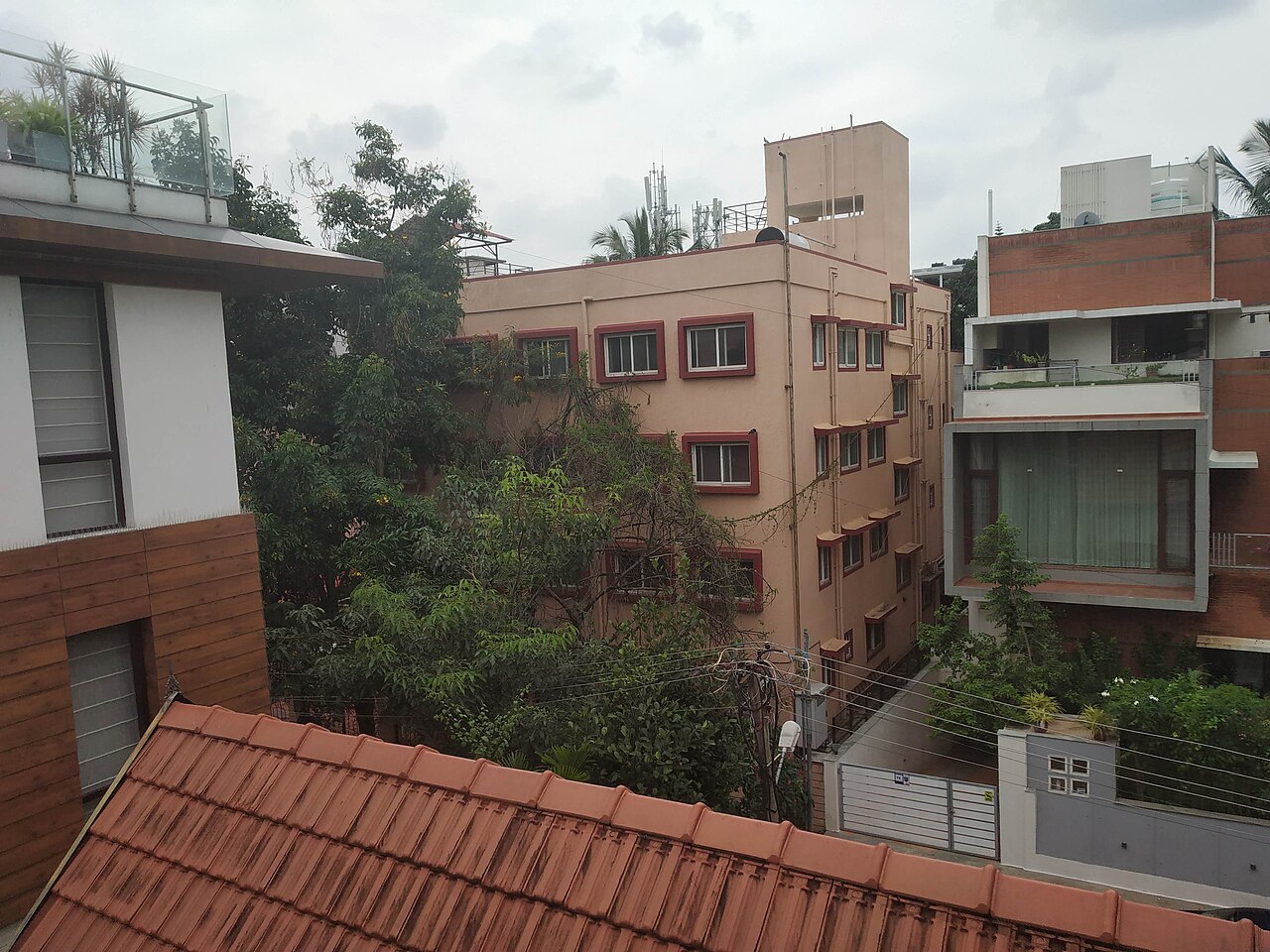
Every few months a post about Bengaluru rent breaks out of r/bangalorerentals and into the national press. This month's was sharper than most. Titled 'Salary is stuck in 2006, but Bengaluru rent is living in 2046. Anyone else trapped in this time paradox?', it described a 1BHK on the second floor of a walk-up in New Thippasandra, near Indiranagar: more than fifteen years old, water on a timed municipal supply, ₹22,000–24,000 a month — and a ₹1.5 lakh security deposit before the keys change hands. The writer had audited their monthly expenses and concluded the maths no longer closed. Thousands agreed. The comments ranged from 'a granite slab in one corner is called a kitchen here' to 'Bangalore needs a rent check at this point'. The post is anecdotal, but the arithmetic underneath it is not, and it is worth taking seriously.
Why this particular post landed
- The deposit is the real shock: ₹1.5 lakh is more than six months of rent on a ₹24,000 flat. Bengaluru's ten-month-deposit habit has softened since the pandemic, but six to eight months remains routine in the Indiranagar–HAL–Thippasandra belt, far above the two-month cap the Model Tenancy Act recommends — a cap Karnataka has not enacted.
- Pay has not kept up: the writer's claim that private-sector salaries are 'beautifully preserved from 20 years ago' is hyperbole, but the direction is right. Fresher packages at services firms have barely moved in a decade in nominal terms, while rents in the east-Bengaluru IT corridor have roughly doubled.
- The timing: the post arrived in the same week the RBI raised the repo rate for the first time in over three and a half years. Rate hikes do not touch a tenant's rent directly — but they do make the landlord's EMI dearer and keep would-be buyers renting, both of which push rents up at renewal.
- The product is poor: a fifteen-year-old walk-up with timed water is not what ₹24,000 bought in 2019. The frustration is as much about value as price.
What the RBI minutes add to the picture
The minutes of the October 5–7 meeting, published on October 21, confirm the committee voted 6–0 to raise the repo rate to 5.50% and 4–2 to move the stance to 'calibrated tightening'. The resolution's own words: rate cuts are off the table in the near term and policy action ahead can only be a hike or a pause. The RBI now projects CPI inflation at 5.2% for the year, touching 6.0% — the top of its tolerance band — in the October–December quarter. For a tenant that means three things: the landlord's financing cost is up, the next decision on December 4 can only hold or tighten further, and the household budget the Reddit writer audited will face the steepest prices of the year in exactly the months when Diwali spending and rent renewals collide.
The honest reading: nothing in the macro picture brings Bengaluru rents down this winter. What a tenant controls is the upfront cost, the renewal terms and the paperwork — not the market.
Where the ₹1.5 lakh actually goes
A security deposit is not a fee; it is your money, held by the landlord against damage and unpaid dues, due back when you leave. In practice it does three other jobs in Bengaluru. It screens tenants — a landlord who asks for six months filters for people with ₹1.5 lakh spare. It earns the landlord interest-free float; at a 6% fixed-deposit rate, ₹1.5 lakh held for two years is roughly ₹18,000 of return the tenant gives up. And it becomes leverage at exit: the city's most common tenant complaint is not the size of the deposit but the deductions and delays when it is returned — 'painting charges' of a month's rent being the classic. Knowing this changes the negotiation: you are not asking for a discount, you are asking the landlord to hold less of your money for free.
Six moves that cut the upfront cost
- Negotiate months, not rupees: landlords anchor on 'ten months' as tradition. Counter with a specific lower number tied to a longer lock-in — 'three months, and I sign for 22 months' — which gives them what they actually want: a tenant who stays.
- Refuse the painting charge upfront: a deduction for repainting is only fair if the flat was freshly painted when you moved in. Photograph every wall at move-in and write 'existing condition' into the agreement; if the owner insists on a painting clause, cap it at a figure, not 'one month'.
- Register the agreement: Karnataka allows online registration of rental agreements. A registered agreement with the deposit amount, deductions and refund timeline written in is the document that wins the deposit dispute — the WhatsApp thread is not.
- Move the money, not the rent: a ₹1.5 lakh deposit sitting idle is the single largest hit to a renter's liquidity. Zero-deposit renting — where an RBI-registered lending partner pays the deposit and the tenant repays it in small monthly instalments — replaces the lump sum with roughly ₹4,000–6,000 a month on a deposit this size, with a Key Facts Statement showing the full cost. The landlord still gets the security they want.
- Time the search: the post-Diwali weeks (mid-November to December) are traditionally soft in Bengaluru — fewer transfers, more vacant flats, more flexible owners. January picks up again with appraisal-season moves.
- Price the commute honestly: the commenter who suggested 'negotiate 20% extra or move to a tier-2 city' was being provocative, but the narrower version is sound — a flat 25 minutes further out at ₹16,000 and a three-month deposit may beat ₹24,000 and ₹1.5 lakh once you count what the saved deposit earns and what the time costs.
What landlords should take from it
The post's loudest reply — 'Bangalore needs a rent check' — is the sound of a market losing goodwill. Rent control, where it has been tried in India, has frozen supply and pushed the best stock off the market; it is not coming, and tenants should not wait for it. But landlords who want long, low-friction tenancies have a cheaper fix than a cap: ask for a deposit that matches the actual risk (two to three months), return it within a fortnight with an itemised statement, and accept a guaranteed deposit from a financing partner in place of cash. Vacancy, not a smaller deposit, is what erodes yield.
The RentHatke take
The Thippasandra post is a story about liquidity. The writer can afford ₹24,000 a month; what breaks the budget is ₹1.5 lakh on a Tuesday. On RentHatke, an RBI-registered lending partner pays the security deposit to the landlord and the tenant repays it in monthly instalments collected by auto-debit — the full cost set out in a Key Facts Statement before signing, and every on-time instalment building a credit history. In a year when the RBI says rates will only hold or rise, keeping ₹1.5 lakh in your own account — earning interest, available for the emergency — is worth more than it has been in a long time.
Found the flat but not the deposit? Check your zero-deposit eligibility on RentHatke in under 2 minutes — no impact on your credit score. (This article comments on a public social-media post and official RBI publications for general information; it is not financial or legal advice. Deposit norms vary by locality and landlord; verify the current terms before you sign.)
Cover image: Apartments and houses in Bengaluru by Shaivikshetty, via Wikimedia Commons (CC BY-SA 4.0).