Two sets of numbers landed this week and, read together, they describe the same thing from two ends. From the lender's end: Paisabazaar reported that instant personal-loan disbursals through its platform rose 32% year on year in August–October 2026, that eligible customers can now see offers of up to ₹7 lakh, and that the money can arrive in as little as two hours. From the household's end: the RBI's latest bulletin tables put household debt at ₹158.5 lakh crore at the end of March 2026 — 45.9% of GDP, against 39.0% in March 2023. That is roughly 55% more debt in three years, while the economy grew by about a third. Indians borrowed ₹21.5 lakh crore of fresh money in 2025-26, up from ₹15.7 lakh crore the year before. Credit has never been easier to get. Whether it is as easy to carry is the question a tenant — who already has one large fixed payment every month — should ask before the next tap on 'Get loan'.
What the data says, without the drama
- Debt is rising faster than income: 39.0% of GDP in March 2023, 41.7% in 2024, 43.1% in 2025, 45.9% in March 2026 (RBI Bulletin, October 2026).
- Savings are thinner: households' net financial savings slipped to 6.3% of GDP in 2025-26 from 7.1% a year earlier.
- Most of it is not home loans: non-housing retail credit — personal loans, cards, vehicle, consumer-durable, education and gold loans — was 58.4% of household borrowing in March 2026, up from 54.9% a year before (RBI Financial Stability Report, June 2026).
- Bank personal-loan growth is accelerating: 17.3% year on year in September 2026 against 11.5% a year earlier. Note that the RBI's 'personal loans' bucket includes housing, vehicle and gold loans too.
- Gold loans are the fastest-growing piece, compounding at about 42% a year since March 2024 — driven largely, the RBI says, by existing borrowers using higher gold prices to take bigger loans and roll over old ones.
- It is not only the young: on Paisabazaar, disbursals to borrowers aged 46–55 grew 70%, and their share of the total rose from 13% to 19%. The 36–45 group is the largest at 40%; 25–35 is 36%.
So are families drowning? Not by the numbers — yet
The reassuring half of the picture is real. The RBI's June 2026 stability report shows the one-year default rate on personal loans falling from 0.51% for loans originated in December 2024 to 0.35% for December 2025, and a rising share of 'prime and above' borrowers. Households still hold about three rupees of financial assets for every rupee of debt. And by international standards India is not highly leveraged: the BIS puts household credit at about 49% of GDP here, against 57.5% in China and 67.2% in the United States. RBI Governor Sanjay Malhotra, speaking in October, said the central bank does not see signs of imminent stress — while warning that long stretches of stability are exactly when risk-taking and leverage build up.
The uncomfortable half is in the detail. Delinquency on small-ticket digital personal loans was about 6.4% in March 2026, up from roughly 4.5% two years earlier, according to credit-bureau data cited by The India Forum — a slice of the market, not the whole, but it is precisely the two-hour, app-based slice that is growing fastest. The RBI has flagged elevated impairment among people holding unsecured loans from five or more lenders. Its income survey of ten banks found new personal loans and fresh bad loans both concentrated among borrowers earning under ₹10 lakh a year. And the average debt per borrower was already ₹4.8 lakh in March 2025, up from ₹3.9 lakh two years before. The system is fine. The person with four EMIs and a rent cheque may not be.
The useful distinction is not 'debt good' or 'debt bad' — it is what the loan replaces. A loan that frees up cash you would otherwise have locked away, at a rate you knew before you signed, is a tool. A loan that pays for this month's lifestyle and is repaid from next month's is a subscription to being short of money.
Why this matters more if you rent
A homeowner's largest outgo is an EMI; a tenant's is rent — and rent does not appear on a credit report, so a lender's algorithm often cannot see it. An app can therefore approve you for an EMI that looks comfortable against your salary and is not comfortable at all once ₹25,000 of rent has left the account. Take a ₹60,000 take-home salary with ₹20,000 of rent. A ₹3 lakh personal loan over three years at 16% is about ₹10,550 a month. Rent plus that one EMI is already 51% of income. Add a phone on no-cost EMI and a credit-card minimum and the fixed share crosses 60% — the zone in which, on one debt-resolution platform's own client data, people typically arrive owing around ₹5 lakh to three or four lenders. Nobody plans to get there. It happens one easy approval at a time.
Five rules before you add an EMI
- Count rent as an EMI. Keep rent plus all loan instalments under 50% of take-home pay; under 40% if your income is variable. The app will not do this sum for you.
- Read the APR, not the monthly figure. The Key Facts Statement must show the annualised cost including processing fees. A 'low EMI' stretched over 48 months can cost far more than a higher EMI over 18.
- One lender at a time. Three small loans from three apps hurt your credit score more than one loan of the same total, and 'five or more lenders' is the exact group the RBI flags as stressed.
- Borrow for things that outlast the loan — a deposit you get back, a course, a medical need — not for things that are gone before the first instalment is due.
- Never miss the date. With bureaus now refreshing scores more often, a single bounced auto-debit shows up within days and adds bounce and late charges on top. Keep the debit date just after salary day.
The RentHatke angle
The security deposit is the one large payment in a tenant's life that is neither consumption nor lost — it comes back. Yet paying it is what empties savings at exactly the moment a move brings brokerage, shifting and furnishing costs, and that is when many people reach for a high-cost instant loan or a credit card. On RentHatke, an RBI-registered lending partner pays the deposit to your landlord and you repay in fixed monthly instalments by auto-debit, with the rate and every charge shown upfront in the Key Facts Statement. It is still credit, and it deserves the same five-rule test as any other loan. The difference is what it is for: it finances a refundable deposit, keeps your own cash free for the move, and the instalment is fixed on day one.
Moving soon? Check your zero-deposit eligibility on RentHatke in under 2 minutes — no impact on your credit score. (This article summarises RBI Bulletin and Financial Stability Report data, BIS statistics and publicly reported platform figures for general information; platform numbers reflect one company's customers, not the whole market. The EMI example is illustrative. This is not financial advice.)
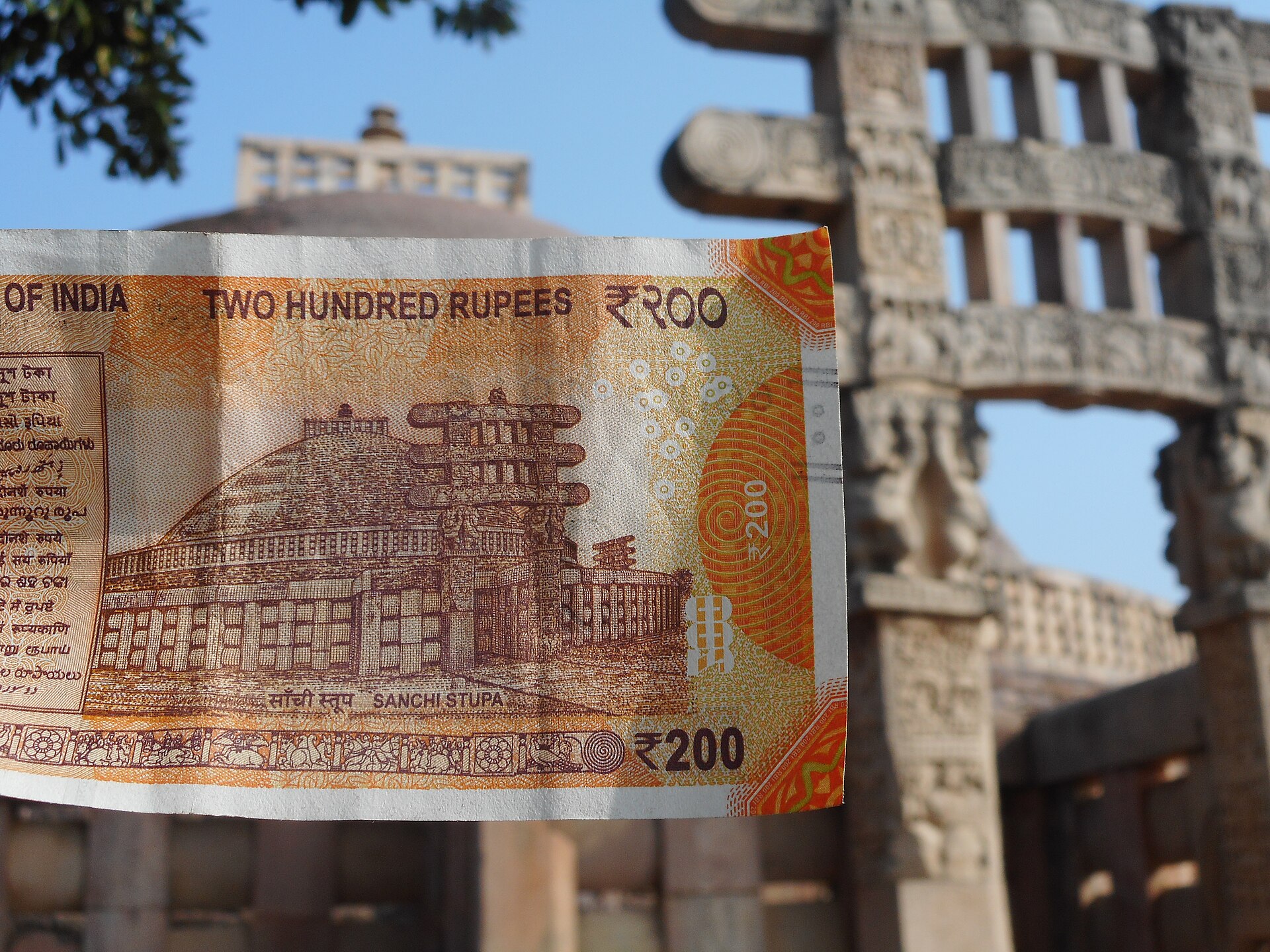
Cover image: A ₹200 note held up at the Sanchi Stupa by WISDOMurali, via Wikimedia Commons (CC BY-SA 4.0).